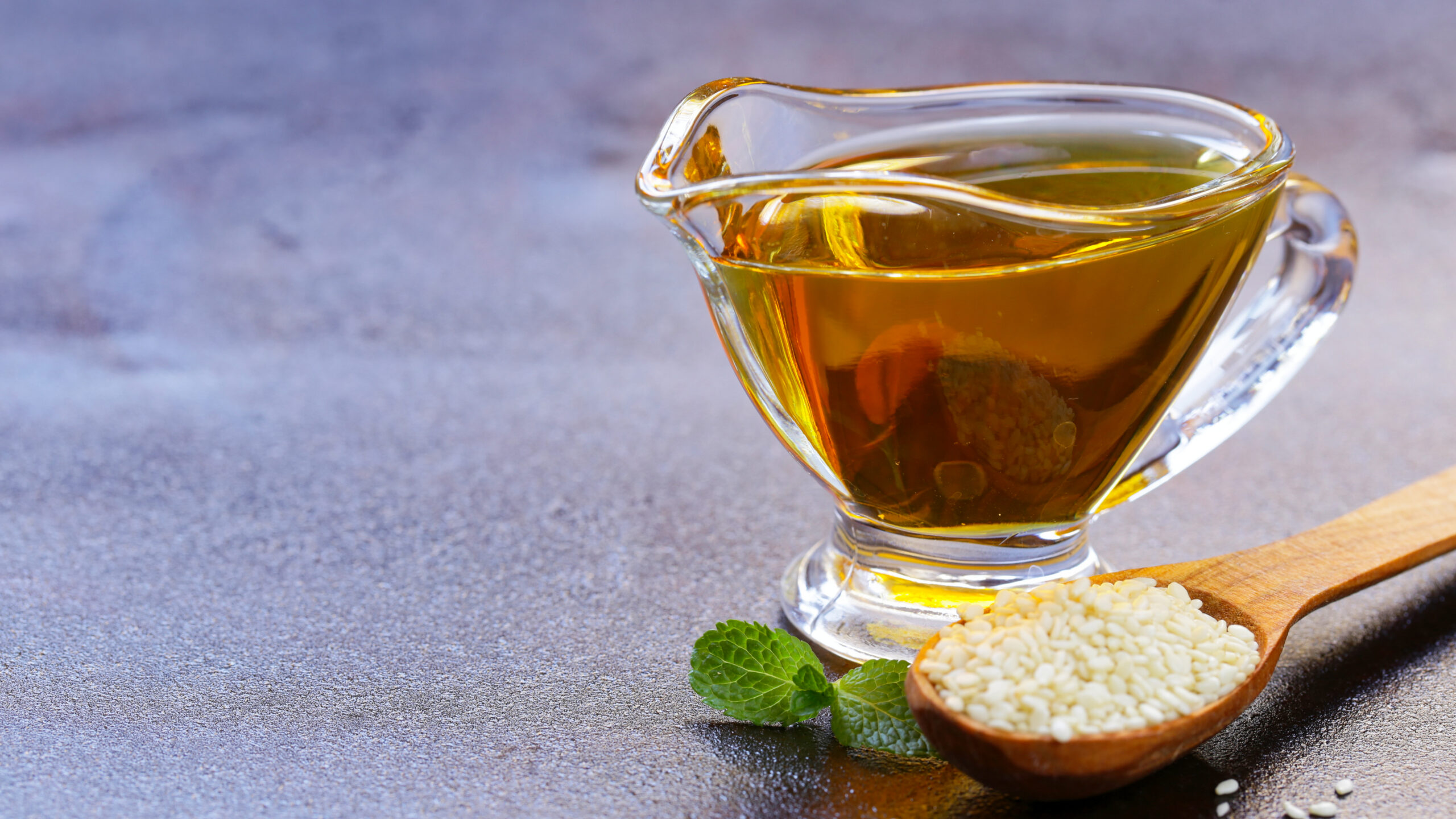
While sesame seeds are more commonly associated with Middle Eastern, Asian and North African cuisines, their use extends into parts of Africa (especially in East and Sahel regions) where sesame (often called “benne”, “gingelly”, “til”) has been grown and pressed for oil and flavor. In modern African‑diaspora kitchens, sesame oil adds a nutty note, a finishing flourish or a medium for sautéed vegetables and legumes. Its subtle flavor and versatility make it a strong candidate for health‑conscious cooks seeking alternatives to heavier traditional oils.
Nutrition & distinctive features
- Sesame oil is rich in unsaturated fatty acids—notably oleic acid (~40 %) and linoleic acid (~40 %)—while saturated fat content is relatively low (~10‑20 %) in good quality oils.
- It contains lignans (plant compounds) such as sesamin, sesamolin, sesamol, which appear to carry antioxidant, anti‑inflammatory and lipid‑modulating functions.
- Because of these compounds, sesame oil is more stable against oxidation than many other seed oils; its natural antioxidants help protect the oil during storage and moderate cooking.
- As a cooking oil, there are two common forms: untoasted (light) sesame oil better for light/medium heat and cooking; toasted sesame oil (dark nutty) more for finishing and flavor rather than high‑heat frying.
Health benefits & considerations
Benefits
- Studies show sesame oil may improve lipid profiles (reducing LDL, raising HDL) and lower markers of oxidative stress and inflammation.
- It may support blood sugar control: In some small human trials, participants using sesame oil showed better fasting glucose and HbA1c values.
- The antioxidant and anti‑inflammatory components (lignans, tocochromanols) suggest potential protective roles for cardiovascular health, liver, and possibly neuro‑degenerative conditions—though human research remains limited.
cautions
- Sesame is an allergen for some people. Even oils may trigger reactions in sensitive individuals.
- As with all oils: high‑calorie, full of fat. Using more doesn’t mean better; context matters.
- The evidence for many benefits is still preliminary; human studies are fewer than lab/animal work.
- Processing and quality matter: refining, heating, or re‑using oil can reduce bioactive content and increase harmful compounds.
Smart use in African cuisine
- Use light (untoasted) sesame oil for sautéing vegetables, legumes, light stir‑fry, or cooking dishes where you want the nutty flavor but still moderate heat.
- Use toasted sesame oil as a finishing drizzle or flavor accent in stews, salads, sauces: e.g., a leafy green stew finished with a teaspoon of toasted sesame oil for aroma.
- Combine sesame oil with other oils: it can form part of a rotation of oils (e.g., palm/red oil for heritage flavor, olive for monounsaturated, sesame for nutty seed oil) so you get varying fat profiles and flavors.
- Store it well: keep in cool, dark place. Use it while still fresh; avoid heating repeatedly or using in deep‑fryer more than necessary.
- Consider smoke point: Sesame oil’s smoke point is moderate; not ideal for very high‑heat deep‑frying many times over. Use oils with higher smoke points for heavy frying, and sesame for lighter applications.
- Be mindful of portion size and pairing: Pair dishes made with sesame oil with plenty of vegetables, legumes and whole grains so the dish remains nutrient‑rich rather than fat‑heavy.
Summary
Sesame oil is a compelling choice for health‑conscious cooks in African and diaspora kitchens. It marries flavor with nutrition: unsaturated fats, antioxidants, unique bioactives. It honors the idea of “seed oil” but with tradition, nuance and modern health sense.
In the next and final instalment of our series, we’ll explore modern industrial oils commonly used in urban kitchens (such as refined sunflower, soybean, canola) and provide a full practical guide: how to choose oils, rotate them, store them, cook with them, and build a sustainable healthy‑oil strategy in African cooking contexts.