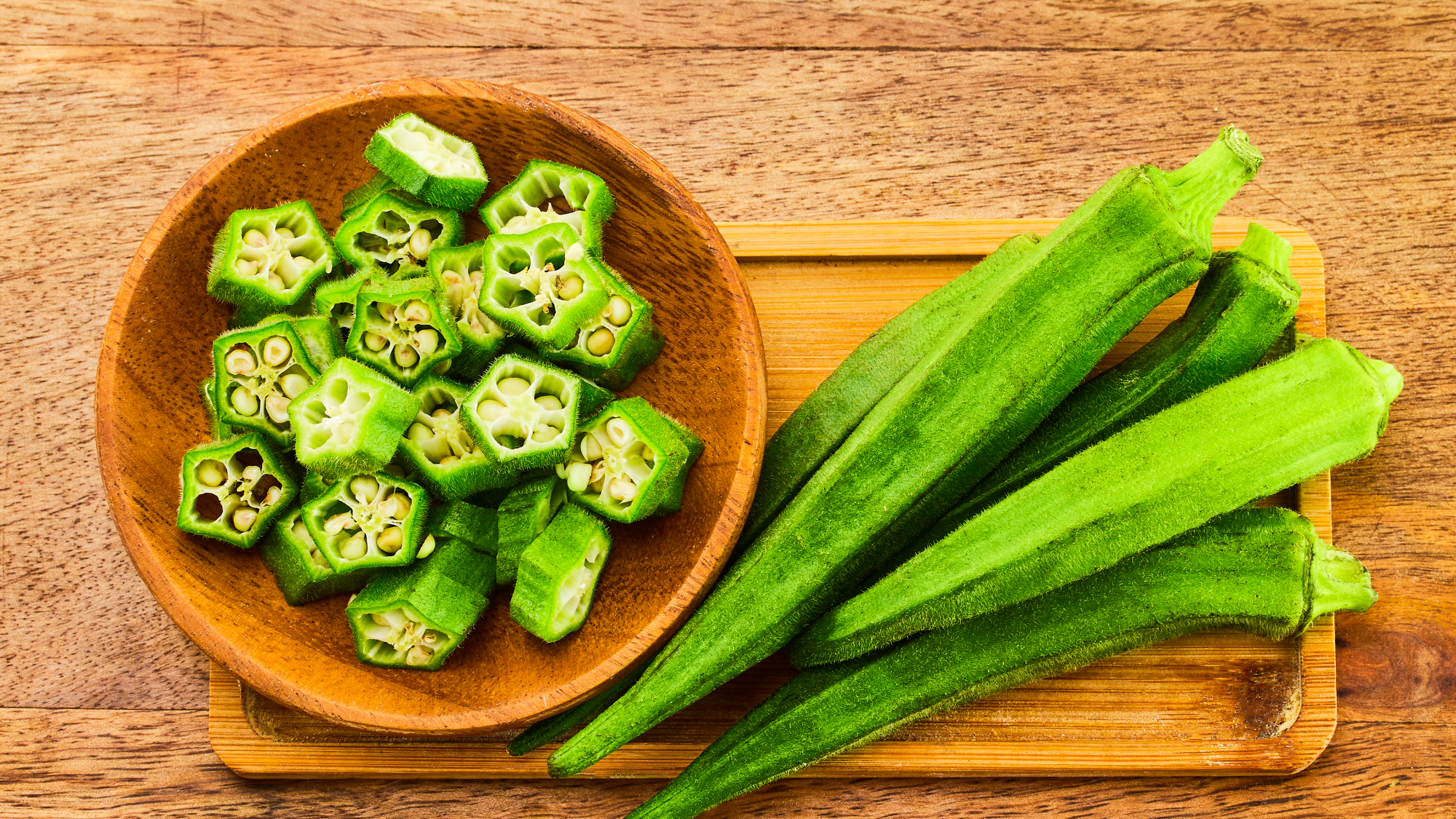
Okra (Abelmoschus esculentus), also known as “lady’s finger,” is a low‑calorie tropical vegetable celebrated for its unique mucilage and impressive nutritional profile. Emerging research in medical nutrition journals confirms that okra is rich in vitamins A, C, K1, and B-complex, as well as minerals like magnesium, potassium, calcium, iron, and folate.
Vitamins in okra
According to multiple peer-reviewed sources, a 100 g serving (~1 cup raw):
- Provides 23–36 µg retinol activity equivalent (Vitamin A) (~5 % DV), supporting vision and immunity.
- Delivers 23 mg Vitamin C (~25–27 % DV), a powerful antioxidant essential for tissue repair and immune function.
- Supplies 31 µg Vitamin K1 (~25–26 % DV), vital for healthy blood clotting and bone metabolism.
- Contains 0.2 mg thiamin (B1), 0.215 mg vitamin B6, 60 µg folate (B9)—important for metabolism and neural development. Studies also note small amounts of riboflavin (B2, ~0.08 mg) and B-complex vitamins overall.
Mineral content
Okra is a reliable source of essential minerals:
- Potassium: ~299 mg per 100 g (~8 % DV) helps regulate blood pressure and electrolyte balance.
- Magnesium: ~57 mg (~14 % DV), associated with cardiovascular and metabolic benefits.
- Calcium: ~82–266 mg (reports vary; example: 82 mg raw, up to 266 mg in some analyses) supporting bone health.
- Iron, phosphorus, copper, and zinc are also present in modest amounts.
Fiber, protein & bioactive compounds
Beyond vitamins and minerals, okra boasts:
- 3–3.2 g fiber per 100 g (~13 % DV), both soluble mucilage and insoluble fiber, aiding digestion, stabilizing blood sugar, and binding cholesterol.
- 1.9–2 g plant protein per serving. Seeds contain balanced essential amino acids, while the oil can yield 20–40 % unsaturated fats rich in linoleic acid.
- Antioxidants like polyphenols, flavonoids (e.g. quercetin, catechins), and lectins, which exhibit anti‑inflammatory, antimicrobial, and possible anticancer activities.
Health benefits backed by research
Medical and nutrition journals highlight multiple health effects:
- Blood sugar management: soluble mucilage and polysaccharides slow carbohydrate absorption; test‑tube and small clinical studies show glucose reduction in type 2 diabetes patients.
- Heart health: fiber and polyphenols help reduce LDL cholesterol and inflammation markers like CRP.
- Digestive and colon health: fiber assists gut motility and mucilage may inhibit harmful bacteria adhesion (e.g. H. pylori).
- Support during pregnancy: folate (60 µg per 100 g) supports neural tube development; vitamin C supports fetal tissue formation.
- Antioxidant & anticancer potential: lectin from okra reduced breast cancer cell growth by up to 63% in lab tests; phenolic compounds show antioxidant synergy with other vitamins.
Practical tips & cooking strategies
- Eat raw or lightly cooked (grilled, roasted, stir‑fried) to preserve heat‑sensitive vitamins like C and folate.
- Cooking with acidic ingredients like tomato helps reduce sliminess while retaining nutrient integrity.
- Use okra’s mucilage as an egg‑white or fat substitute in baking, smoothies, or soups.
- Limit ingestion if you have kidney disease, as naturally occurring oxalates may impair calcium or iron absorption.
Final thoughts
Okra is a low‑calorie, nutrient-rich vegetable cuffed with vitamins C, A, K1, B-complex, folate, and crucial minerals like magnesium, potassium, and calcium. With compelling antioxidant, anti‑diabetic, digestive, and cardiovascular properties, it's a smart inclusion for a health‑focused diet.