
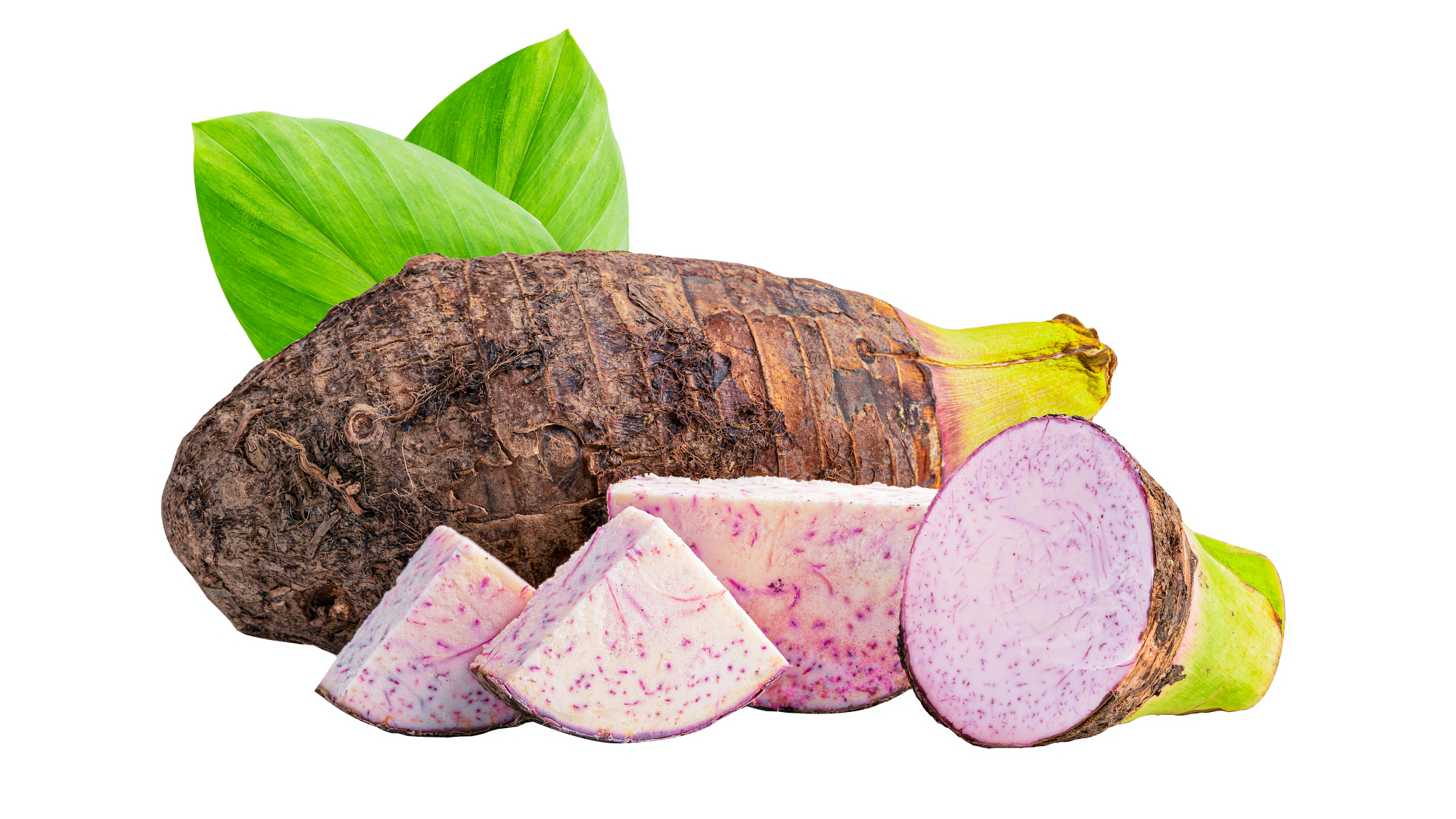
Taro (Colocasia esculenta) is a root vegetable enjoyed across Africa, Asia, and the Pacific. In West Africa, it is valued for its earthy flavor, versatility, and ability to thrive in different soils. In East Africa, taro is grown in wetter regions and enjoyed in traditional dishes that highlight its creamy texture. Whether boiled, pounded, or added to soups, taro offers a rich source of carbohydrates and key nutrients that can support overall health when part of a balanced diet.
Nutrient profile of taro
Taro is a starchy tuber similar to yam or cassava but with a smoother, creamier texture when cooked. A 100-gram serving of boiled taro provides approximately:
- Calories: 142 kcal
- Carbohydrates: 34 g
- Protein: 0.5–2 g
- Fat: 0.1 g
- Fiber: 5 g
Taro is rich in vitamins and minerals such as:
- Vitamin E – an antioxidant that helps protect cells from damage
- Vitamin C – supports immune function and skin health
- Vitamin B6 – aids in energy metabolism and brain function
- Potassium – helps regulate blood pressure and muscle contraction
- Magnesium – supports nerve function and energy production
- Manganese – essential for bone health and metabolism
Its high fiber content may also support digestive health and help regulate blood sugar levels.
Traditional and modern uses
Across Africa, taro has many local names and culinary applications:
- West Africa – boiled or steamed taro is eaten with pepper sauce or vegetable stews, pounded into fufu, or sliced and fried. Taro leaves are often cooked into nutrient-rich green dishes.
- East Africa – in Uganda and Kenya, taro (known locally as nduma or malanga) is boiled, roasted, or added to soups. In coastal areas, it is sometimes simmered in coconut milk for a creamy side dish.
Taro’s mild flavor and adaptability make it an excellent alternative to yam, plantain, or cassava in both regions.
Health benefits of taro
When prepared correctly, taro can contribute to:
- Steady energy release – from complex carbohydrates and fiber
- Digestive health – resistant starch supports beneficial gut bacteria
- Heart health – potassium and magnesium help maintain normal blood pressure
- Antioxidant protection – vitamins C and E, plus manganese, help reduce oxidative stress
Naturally gluten-free, taro can be used in alternative flours and recipes for those with gluten sensitivity.
Safety considerations
Raw taro contains oxalates, which can irritate the mouth and throat if not cooked properly. To ensure safe consumption:
- Always cook taro thoroughly – boiling, baking, or steaming removes most oxalates.
- Soak before cooking – soaking taro chunks in water for several hours can further reduce irritation.
- Avoid eating raw taro – it can be unpleasant and unsafe.
People prone to kidney stones may need to limit taro intake, as oxalates can contribute to stone formation in susceptible individuals.
Takeaways for healthy taro consumption
- Include taro as part of a varied diet with adequate protein and micronutrients
- Cook thoroughly to remove natural irritants
- Use taro leaves for extra vitamins and minerals
- Enjoy taro in both West African and East African traditional dishes for culinary diversity








