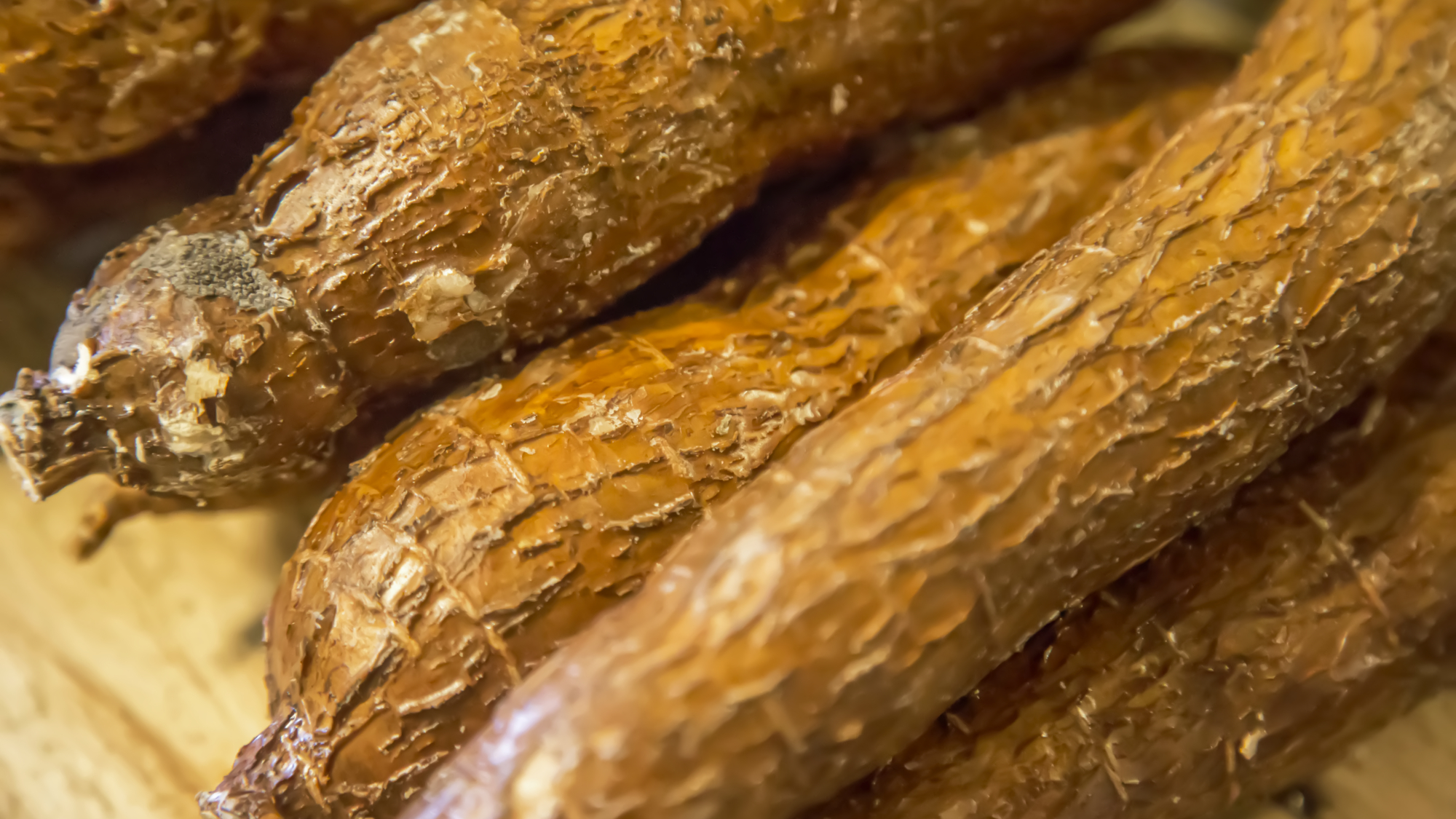
Cassava (Manihot esculenta), also called manioc or yuca, is a starchy root that nourishes millions of people across West Africa and beyond. Known for its versatility and resilience in dry climates, cassava offers important carbohydrates along with vitamins and minerals. When prepared properly, it can be a valuable part of a balanced diet.
Nutrient profile of cassava
Cassava is primarily a source of complex carbohydrates, providing sustained energy for daily activities. A 100-gram serving of boiled cassava contains roughly:
- Calories: 160 kcal
- Carbohydrates: 38 g
- Protein: 1.4 g
- Fat: 0.3 g
- Fiber: 1.8 g
While cassava is low in protein and fat, it contributes essential micronutrients:
- Vitamin C – supports immune function and skin health
- Folate (B9) – important for cell growth and development
- Vitamin B6 – supports brain function and metabolism
- Potassium – helps regulate blood pressure and muscle function
- Magnesium – involved in nerve function and energy production
Including cassava alongside beans, fish, or leafy greens helps balance its lower protein content.
Traditional and modern uses
Across West Africa, cassava is enjoyed in many forms:
- Fufu – fermented and pounded
- Gari – roasted granules eaten with soup or milk
- Cassava leaves – cooked as a vegetable rich in protein and iron
- Cassava flour – gluten-free baking or thickening agent
- Attiéké - fermented, granulated cassava dish from Côte d’Ivoire with a light, couscous-like texture and mildly tangy flavor.
These preparations not only enhance flavor but also help reduce naturally occurring toxins.
Safety considerations
Raw cassava contains cyanogenic glycosides, compounds that can release cyanide in the body if not processed correctly. Improper preparation can lead to acute poisoning or, over time, health issues like goiter. To make cassava safe:
- Peel the root completely – toxins are concentrated in the peel.
- Soak or ferment for 12–48 hours to break down harmful compounds.
- Cook thoroughly – boiling, roasting, or steaming reduces toxins further.
- Avoid eating raw cassava.
Sweet cassava varieties have lower cyanide levels than bitter ones, but both should always be processed before eating.
Health benefits when prepared correctly
When handled safely, cassava can:
- Provide a steady energy source for active lifestyles
- Support digestion due to its resistant starch and fiber
- Offer gluten-free options for people with celiac disease or wheat sensitivity
- Supply key minerals like potassium and magnesium for muscle and nerve health
Pairing cassava with vitamin A–rich vegetables like pumpkin or palm oil dishes helps create nutrient-dense meals.
Takeaways for healthy cassava consumption
- Enjoy cassava as part of a varied diet with adequate protein and micronutrient sources
- Always peel, soak, ferment, and cook before eating
- Choose local, fresh roots for best taste and safety
- Use cassava leaves for extra nutrition when available