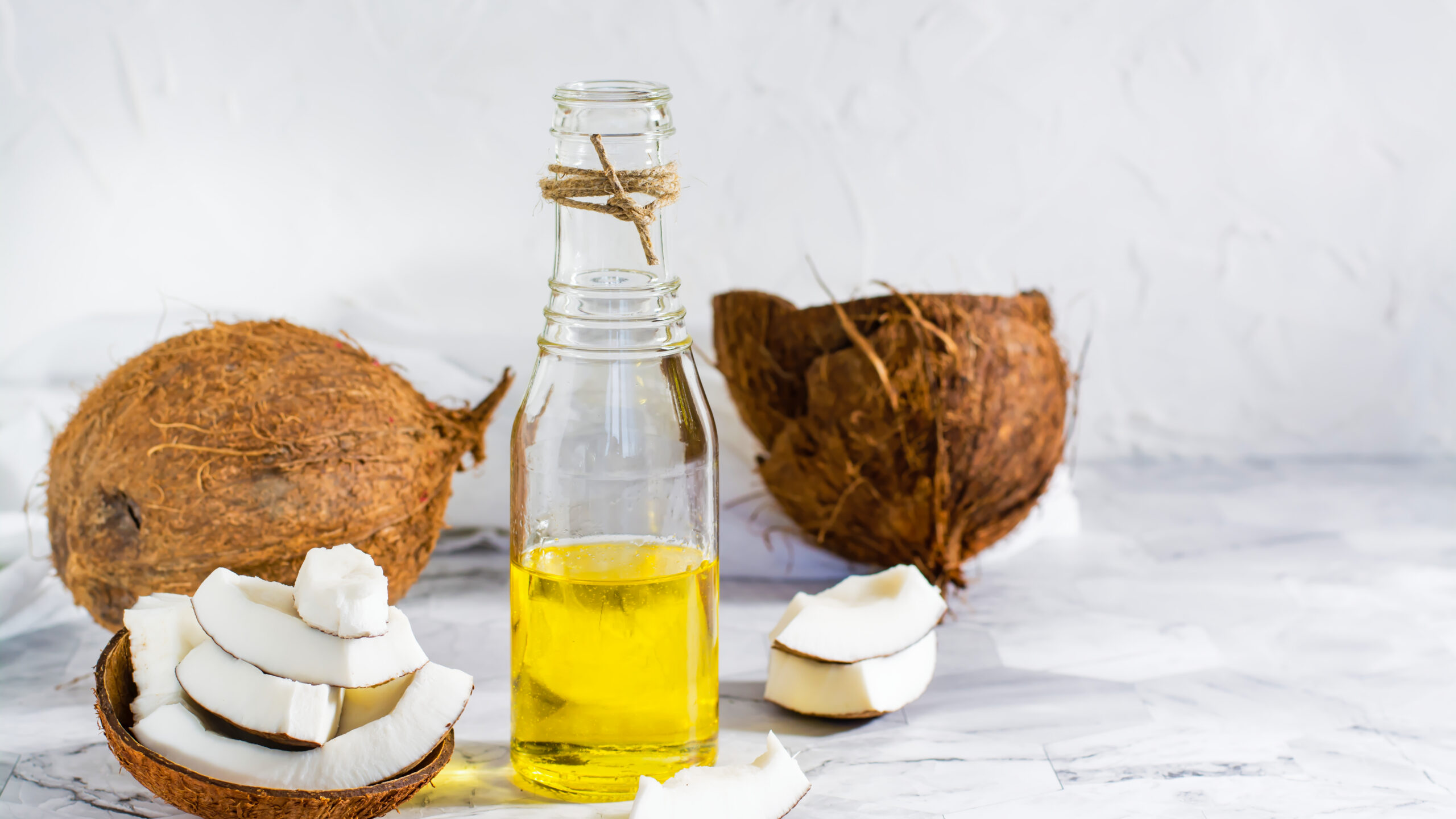
In East and West African coastal communities (Kenya, Tanzania, Ghana, Nigeria, the Seychelles) coconut oil is not new. It is ancient. Pressed from the white flesh of mature coconuts, this oil plays a vital role in stews, rice dishes, and porridges like maharagwe ya nazi (Kenyan coconut bean stew) or ekpang nkukwo (Nigerian cocoyam dish). Coconut trees grow along tropical belts and their oil represents food, medicine and economy.
Nutrition at a glance
- Fat content: ~90% saturated fat, mostly lauric acid (a medium-chain fatty acid).
- Calories: ~120 kcal per tablespoon
- Cooking properties: Highly stable under heat; long shelf life.
- Nutrients: Contains small amounts of vitamin E and polyphenols in virgin forms.
Coconut oil’s fat structure makes it highly resistant to oxidation, which is useful in high-heat cooking, unlike many polyunsaturated oils. But the same structure also triggers concerns about cholesterol and heart health.
Health benefits: Real or hype?
Potential Benefits
- MCTs (Medium-Chain Triglycerides): Found in coconut oil (especially lauric acid), MCTs are metabolised quickly for energy. They may aid short-term weight management and mental energy.
- Antimicrobial action: Lauric acid has shown some antimicrobial and antifungal effects in lab studies.
- Stable for cooking: Virgin coconut oil resists oxidation during cooking and has a mild, sweet aroma that enhances traditional dishes.
Health concerns
- Raises LDL (“bad”) cholesterol: Studies show that coconut oil significantly increases LDL cholesterol, potentially raising heart disease risk when consumed frequently.
- Mixed evidence on benefits: Some human studies suggest benefits; others do not. The American Heart Association does not recommend it as a primary oil due to saturated fat levels.
- Portion control matters: Like all oils, it is calorie-dense. The traditional serving sizes may no longer match modern calorie needs.
Smart use in cooking
To respect coconut oil’s cultural value while protecting heart health:
- Use virgin or cold-pressed coconut oil for maximum aroma and nutrient retention.
- Use it in small amounts—to flavour, not flood, a dish.
- Best for dishes that benefit from coconut flavour: rice, lentils, porridges, seafood, coconut-milk-based stews.
- Avoid excess frying with coconut oil—it’s heat stable but best used sparingly.
- Rotate oils: Don’t rely solely on coconut oil. Balance it with oils richer in unsaturated fats, like olive or sesame.
- Storage: Store in a cool place. Coconut oil solidifies below ~24°C but melts easily in warm environments.
Summary
Coconut oil is tradition in a bottle: flavor, identity, resilience. But it must be used with knowledge. While it enriches meals and carries tropical heritage, modern research urges moderation. When used sparingly, for flavor and function, it adds depth without derailing health. In our next article, we explore sesame oil, East Africa’s fragrant seed-based gift.