When we talk about health and nutrition, vitamins often steal the spotlight, but they can feel like an alphabet soup of confusing terms and numbers. Let’s decode them with clarity and simplicity!
A Is for Vitamin A – The vision vitamin
Vitamin A keeps your vision sharp, skin healthy, and immune system strong. You’ll find it in orange and dark leafy greens. Think sweet potatoes, carrots, spinach, and kale.
Fun fact: carotenoids (like beta‑carotene) are vitamin A precursors found in plants. Your body converts them into the active form.
B Is for the B‑Vitamin family – Energy & mood
The B‑vitamin group includes eight powerhouse nutrients (B1–B12) that help convert food to energy, support brain function, and maintain a healthy nervous system.
- Vitamin B1 (Thiamine): Found in whole grains and legumes.
- Vitamin B2 (Riboflavin): Rich in dairy, eggs, leafy greens.
- Vitamin B3 (Niacin): Found in meat, fish, nuts.
- Vitamin B6 (Pyridoxine): Present in bananas, potatoes, chicken.
- Vitamin B9 (Folate): Crucial during pregnancy and found in leafy greens, beans.
- Vitamin B12 (Cobalamin): Vital for nerve health—only in animal products or fortified foods.
C Is for Vitamin C – Immunity & skin health
Known for boosting the immune system, Vitamin C is also essential for collagen production, which keeps skin firm and wounds healing. Enjoy it in citrus fruits, berries, bell peppers, and broccoli.
D Is for Vitamin D – The sunshine vitamin
Vitamin D helps your body absorb calcium, promoting strong bones and supporting immune health. Although sunlight is the main source, it’s also found in fatty fish (like salmon), fortified dairy, and eggs. Especially in winter months, supplementation may be necessary.
E Is for Vitamin E – The antioxidant champion
As a powerful antioxidant, Vitamin E protects cells from damage and helps keep your immune system healthy. Nuts, seeds, spinach, and avocado are all good sources.
K Is for Vitamin K – The clotting helper
Vitamin K’s primary job is blood clotting—without it, even small cuts could be hard to stop. Plus, it supports bone health. You’ll find it in leafy greens (like kale, spinach, and broccoli) and fermented foods like natto.
Why getting the right vitamins matters
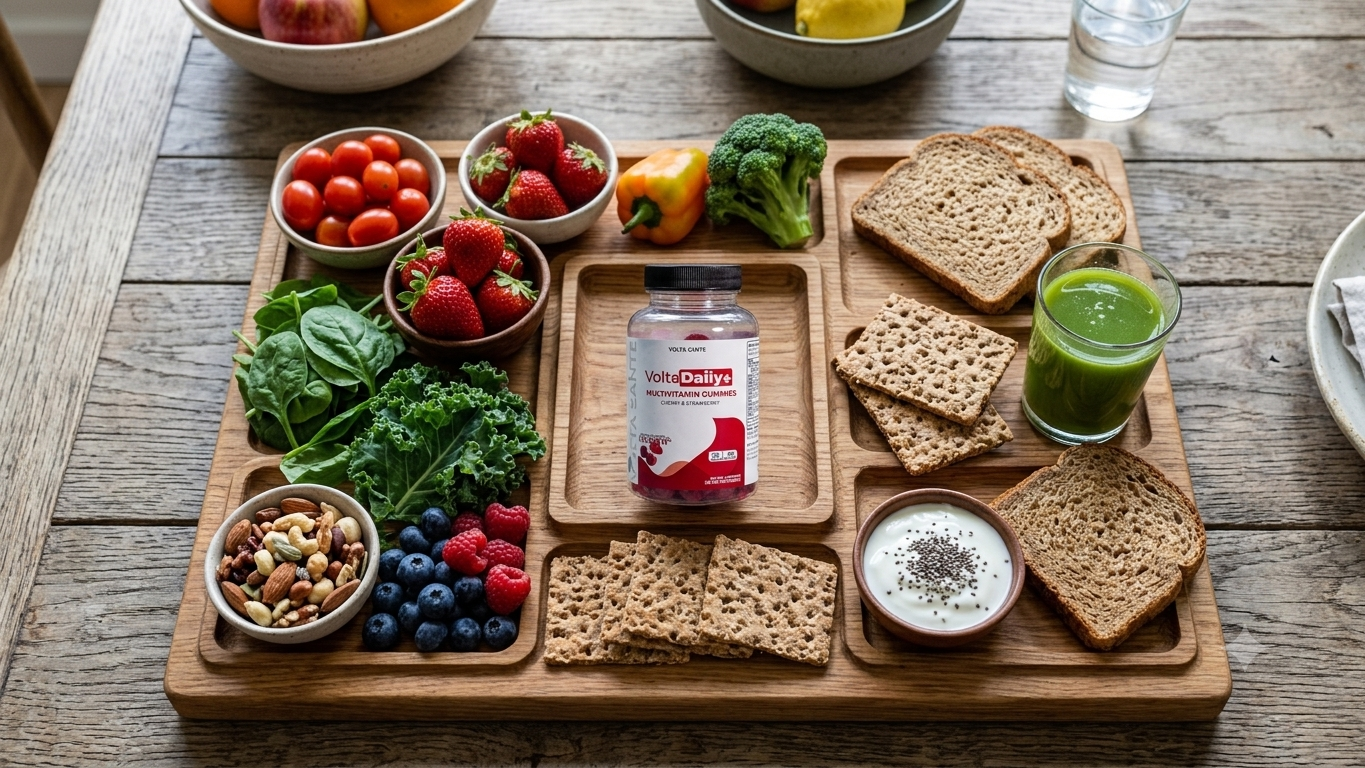
We can get most vitamins through a balanced diet full of whole foods—fruits, veggies, lean proteins, nuts, seeds, and whole grains. However, certain life stages or health conditions may require supplements. Always consult your healthcare provider before starting any new supplement regimen.
Vitamins that dissolve in water—like C and B vitamins—aren’t stored in your body and need to be consumed regularly. Fat‑soluble vitamins (A, D, E, K), on the other hand, are stored in your body’s fat tissues and liver, meaning there’s a risk of overdose if taken in large supplement doses. Moderation is key!
Quick Reference Table
| Vitamin | Main Role | Food Sources |
| A | Vision, immunity, skin | Sweet potatoes, carrots, spinach |
| B | Energy, brain, nerves | Whole grains, meats, legumes |
| C | Immunity, skin repair | Citrus, berries, bell peppers |
| D | Bone strength, calcium absorption | Sunlight, fatty fish, fortified milk |
| E | Antioxidant, cell protection | Nuts, seeds, spinach |
| K | Blood clotting, bone metabolism | Leafy greens, broccoli, natto |
Getting started with vitamins
- Start with whole foods. Focus on a colorful, varied diet full of nutrient‑rich options.
- Check for gaps. If you’re vegan, pregnant, elderly, or live in low‑sunlight places, consult a doctor about supplementation.
- Avoid mega‑doses. Stick to the recommended daily amounts—more isn’t always better.
- Choose wisely. If supplements are needed, look for reputable brands that undergo third‑party testing to ensure purity and safety.
Bottom line Understanding the ABCs of vitamins is the first step toward taking charge of your health. They’re essential, but more isn’t always better. A colorful, whole‑food diet and smart supplementation will keep you vibrant and energized.